Whats the Weather Going to Be Like Today#tts=0
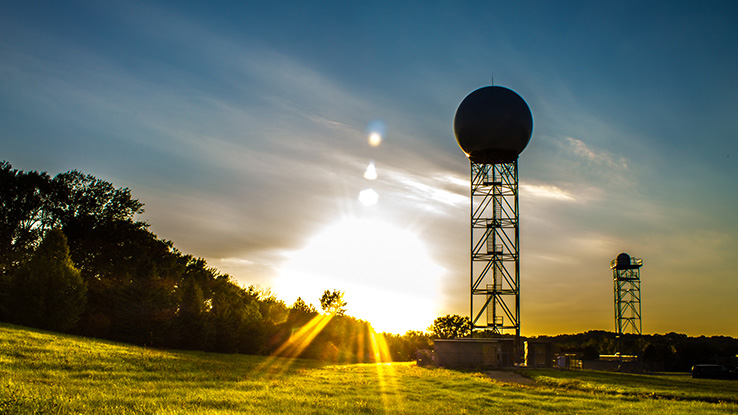
The weather plays a office in everything we do, from the way nosotros live our everyday life to the choices we brand for our vacations. In many areas, the weather can vary widely from one day to the next, with the conditions on some days existence quite destructive. Have you e'er wondered what affects the conditions and what makes it alter so much?
Several different factors affect the conditions, from daily developing conditions to long-term trends. Temperature, humidity, atmospheric pressure, precipitation, wind, cloud formation and sunlight are the key elements that determine conditions, and each component affects the globe effectually united states of america in a dissimilar way.
Temperature
Simply put, the temperature is a measure of how hot or cold the atmosphere is at any given moment. It's i of the most obvious weather weather that people immediately discover — no special equipment required unless y'all desire to know the exact temperature reading. Meteorologists rely on thermometers to measure out temperature in degrees — Fahrenheit in imperial measurements and Celsius in metric measurements. Scientists likewise use other measurement scales, such as Kelvin and Rankine.
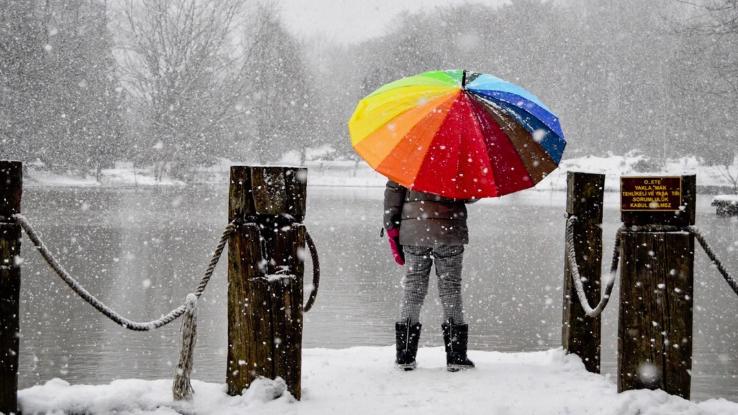
Temperature readings follow a logical standard, with higher degree measurements indicating college levels of warmth. When skies are clear, the temperature tin vary widely, depending on seasonal variations (position of the Earth and the sunday), time of solar day, wind velocity and other factors. On cloudy days, the cloud comprehend likewise works to moderate temperatures.
Air Pressure
Atmospheric pressure, too known equally barometric pressure or but air pressure, is a measurement of the pressure exerted past the weight of the atmosphere in a particular area. The force per unit area of the atmosphere doesn't necessarily have a direct upshot on the weather at whatsoever given moment, but information technology offers an accurate method for predicting what the conditions conditions are likely to exist inside a certain timeframe. Higher atmospheric pressure by and large signals fair weather, while falling pressure can indicate that a tempest is coming.
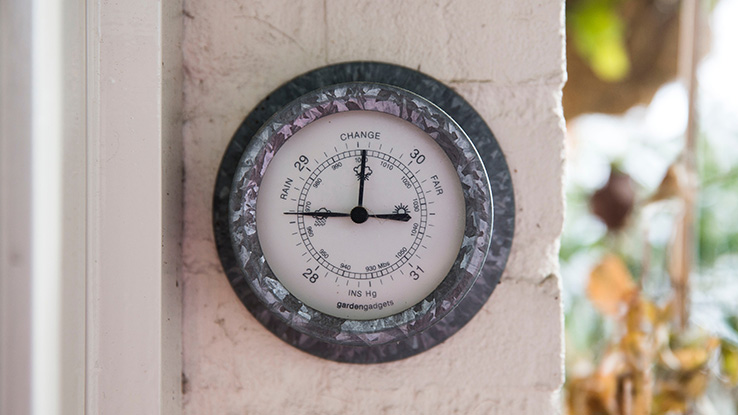
Meteorologists use barometers to measure the air force per unit area in an area. Monitoring ascension and falling force per unit area on a barometer can help forecasters make educated predictions about the type of weather that is on the horizon every bit well equally help meteorologists spot trends or abrupt changes in weather.
Humidity
Humidity measures the amount of moisture in the air. H2o vapor levels can rise and fall in the temper depending on diverse conditions. In libation weather, humidity in the air tends to exist lower, while humidity oftentimes rises when the weather is warmer. Meteorologists utilize a hygrometer to measure relative humidity, which is the percentage of moisture in the air compared to the highest amount of h2o the atmosphere can hold at that specific temperature.

The closer the relative humidity gets to 100%, the more likely you are to encounter precipitation like rain, snow or fog. Another measurement of humidity that is familiar to many people is dew point, which occurs at the temperature the current amount of water vapor in the air would equal 100% relative humidity. The closer the dew point is to the current temperature, the higher the relative humidity climbs.
Atmospheric precipitation
When the relative humidity reaches 100% or when the dew signal matches the electric current temperature, condensation of moisture occurs in the atmosphere. We telephone call this condensation precipitation, and it can accept many dissimilar forms. The moisture could fall to the ground in the form of rain, and if the atmospheric atmospheric condition are right, thunderstorms could form. During some storms, ice crystals known as hail clump together and fall. Other storms may create other types of dangerous and damaging conditions, such as lightning and tornadoes.
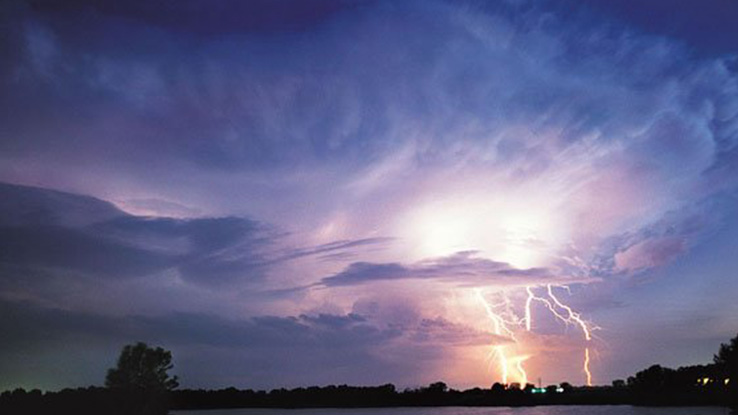
If the air is cold enough, the precipitation tin can fall to the ground as snowfall, sleet or freezing pelting. Water vapor tin can also condense as a depression hanging cloud near the ground'southward surface, forming what nosotros call fog.
Deject Formations
Deject comprehend works with the dominicus to determine atmospheric condition conditions from day to day. Clouds are formations of water vapor in the sky that can have different shapes and take dissimilar effects on the conditions. The highest, wispiest clouds consist of noctilucent, cirrus, cirrocumulus and cirrostratus clouds. Noctilucent clouds form more than 85,000 feet upwards in the mesosphere and don't accept anything to do with weather. Cirrus clouds are more often than not associated with off-white conditions unless they are followed by the formation of cirrostratus clouds, which typically grade a day or and then before pelting or snowstorms. Cirrocumulus clouds are more mutual in fair, cold weather condition during the winter months.
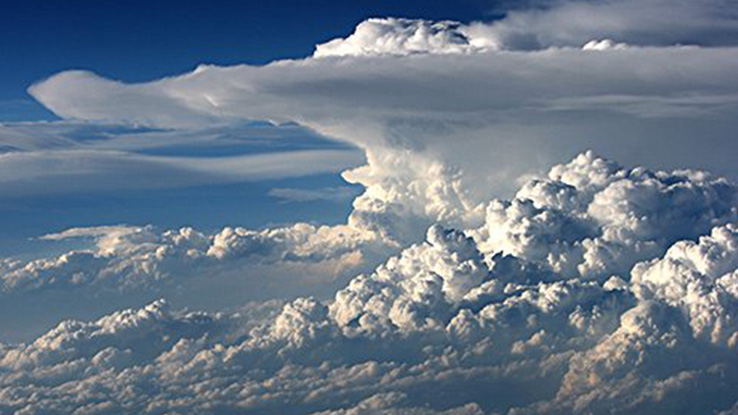
Clouds at mid-level altitudes of 7,000 to 23,000 feet include altocumulus and altostratus. Altocumulus clouds look a bit like storm clouds with darker, grayish sections, and then it'due south not surprising that they often bespeak you can expect a thunderstorm later in the twenty-four hours. Altostratus clouds, which cover broader stretches of the sky and look greyness or blue-gray, normally betoken looming rain or snowstorms.
Lower clouds form up to vii,000 anxiety higher up the ground and consist of stratus, stratocumulus and nimbostratus clouds. Stratus clouds are gray, wispy, very low to the basis and sometimes have rain falling from them. Drizzling rain is mutual with stratocumulus clouds, which fits their lumpy, gray appearance. Dark grey nimbostratus clouds often cover big sections of the heaven and are a source of ongoing pelting or snow.
Current of air
As air moves parallel to the surface of the planet, information technology creates wind. Caused when the sun unevenly heats the Earth, these air currents motion from high-pressure areas to low-pressure areas, which generally leads to w to east motility in the northern hemisphere and eastward to westward movement in the southern hemisphere. The consequence of pressure zones on air currents explains why winds often blow more strongly when weather fronts and changes are approaching.
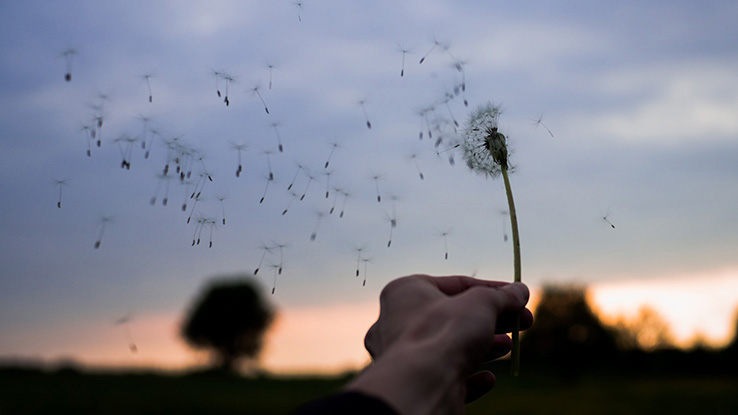
At higher elevations in the temper, winds can blow at much faster speeds than they do at the surface. These high-level winds can blow storm systems and areas of lower force per unit area beyond the surface of the atmosphere, causing irresolute weather patterns in unlike places along their path.
The Touch on of the Dominicus and Seasonal Fluctuations
Sunlight isn't really one of the six official elements of atmospheric condition, but the lord's day certainly plays a key role in atmospheric conditions all over the planet. Globe revolves around the sun, and that movement combined with the tilt of the planet on its axis leads to the unlike seasonal weather condition we experience, depending on where nosotros live in the earth.
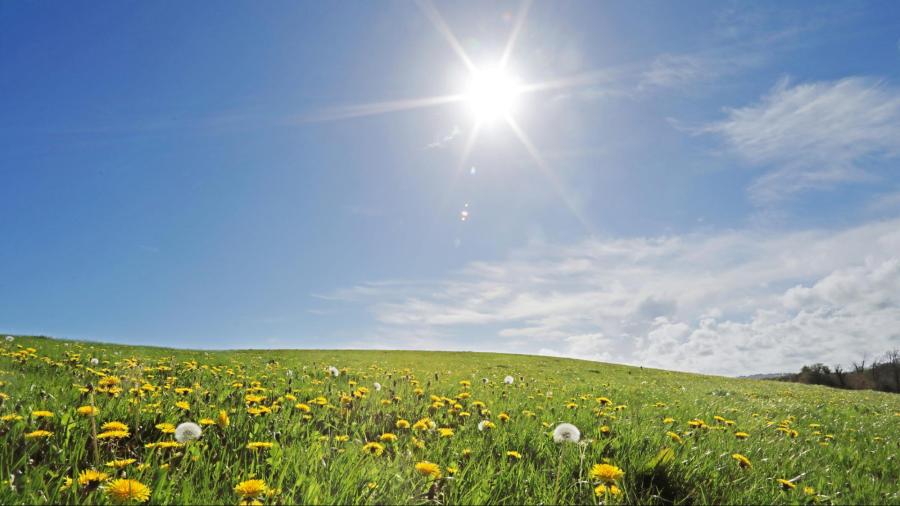
World tilts on its axis at a diagonal angle toward the sun as information technology revolves effectually it. Throughout each yearly revolution, the hemisphere that tilts closest to the sun experiences warm summertime months, while the hemisphere pointed away from the sun experiences colder winter weather. These seasonal variations bear upon everything from typical daily temperatures to weather atmospheric condition that are tied to temperature, such as hurricanes and blizzards.
Source: https://www.reference.com/science/seven-weather-elements-7471c4c1cafc02b3?utm_content=params%3Ao%3D740005%26ad%3DdirN%26qo%3DserpIndex
0 Response to "Whats the Weather Going to Be Like Today#tts=0"
Post a Comment